

By Shackman Mandishona
When 16-year-old Tariro (not her real name), a learner at Parirehwa Government School in Goromonzi District, stopped attending classes regularly, her friends noticed a sudden change. Once an active learner with dreams of completing her education, she gradually became withdrawn and eventually disappeared from school altogether.
According to one of her close friends, Tariro later discovered she was pregnant. “She wanted to continue with school, but after the pregnancy people started talking and she became uncomfortable. She eventually stopped coming to school,” said her friend, who spoke on condition of anonymity.
Tariro’s story reflects the reality facing thousands of learners across Zimbabwe, where violence, sexual abuse, early pregnancies and inadequate support systems continue to threaten children’s right to education.
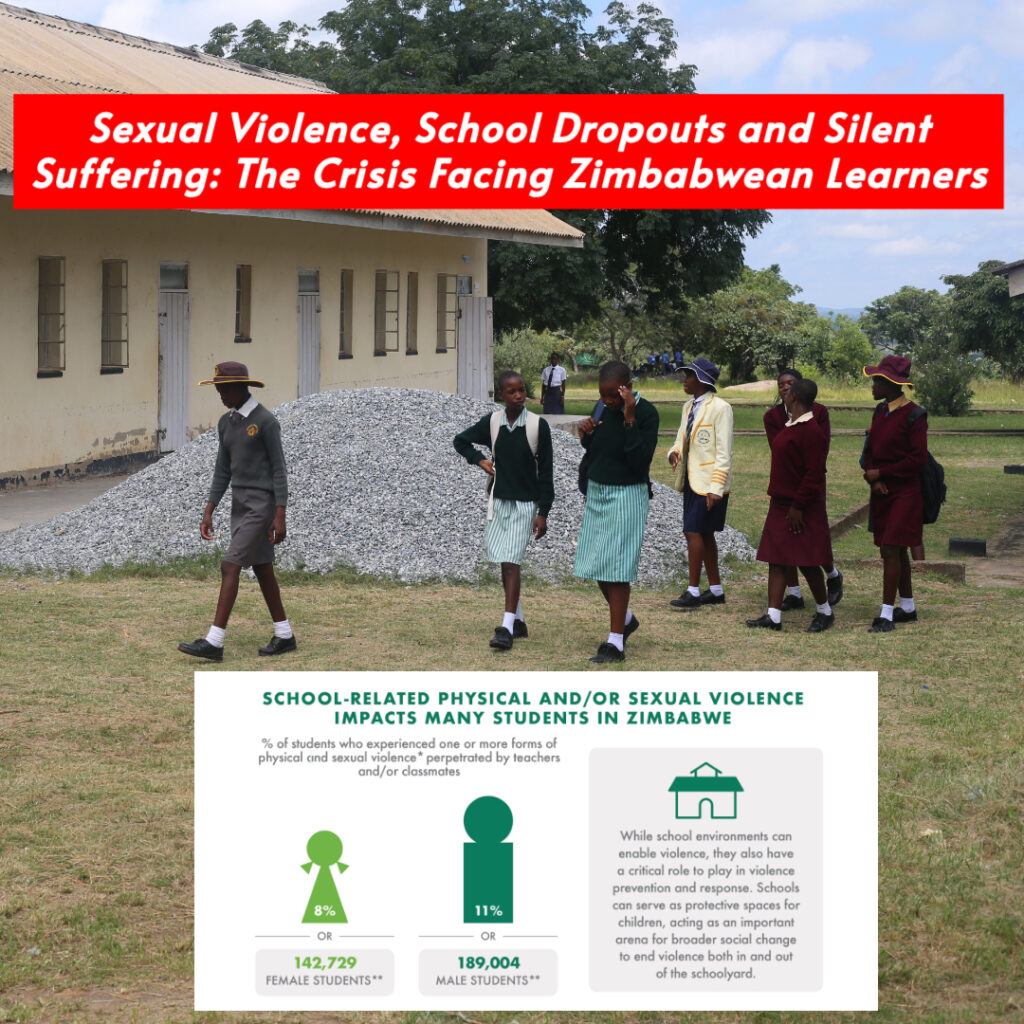
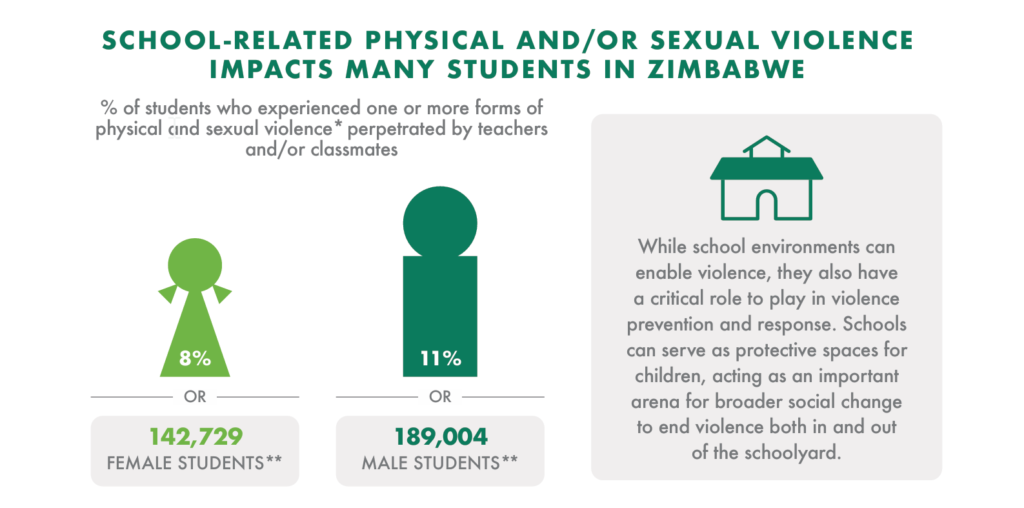
Data from the Zimbabwe Violence Against Children Survey estimates that approximately 189,004 boys and 142,729 girls have experienced physical or sexual violence within school environments. The data further shows that violence contributes significantly to absenteeism and school dropout rates.
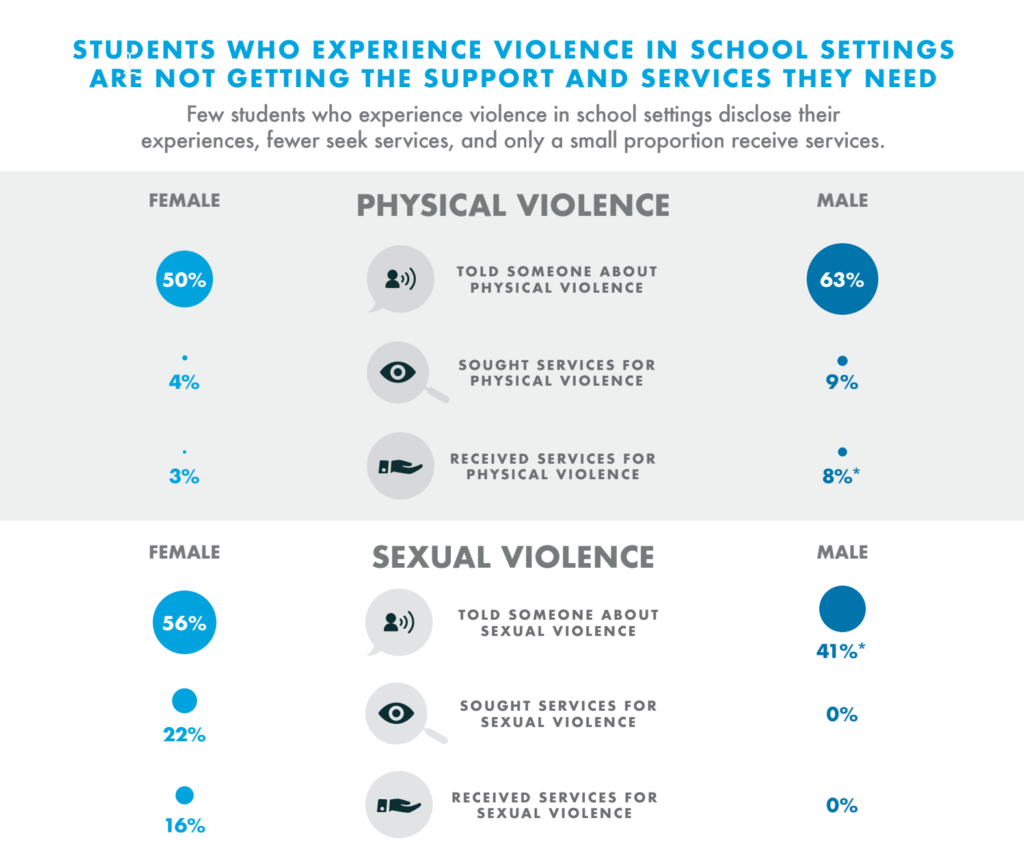
Among boys who experienced physical violence from teachers, 18 percent reported missing school because of the abuse, while 15 percent of girls who experienced sexual violence later missed classes due to fear, stigma and trauma.
However, perhaps the most alarming finding is the lack of support available to victims. The data shows that among girls who experienced sexual violence, only 9 percent sought professional support services, while only 8 percent received assistance, meaning more than 90 percent of victims are left to cope without professional help. This means more than nine out of every ten girls who experience sexual violence are left without formal counselling, legal assistance, medical support or other professional interventions.
The Education Coalition of Zimbabwe (ECOZI), a civil society organisation working in the education sector, has been implementing a number of programmes in partnership with the Ministry of Primary and Secondary Education and UNESCO. Speaking during an ECOZI workshop in Goromonzi, under the Safe Schools, Safe Communities: An Integrated Approach Programme, ECOZI Director, Mr. Elvis Chitsungo said the initiative complements existing Ministry of Primary and Secondary Education policies aimed at creating safe and supportive learning environments.
“The Ministry has a number of circulars that speak to safe schools, including Circular Number 16 of 2023 on Guidance and Counselling. Our programme is supporting schools in implementing these frameworks and strengthening mechanisms that protect learners from violence and abuse,” he said.
The organisation’s Programmes Manager, Wadzanai Chitiga says addressing school-related violence requires a collective response involving families, communities, schools and government institutions. “Awareness raising on the importance of child protection is critical. Parents need to be actively involved, communities must play their role and government should continue strengthening policies on school-related gender-based violence,” she said.
While acknowledging that Zimbabwe has child protection policies in place, Chitiga said implementation remains constrained by limited resources. “We do have policies in place. We only have limited personnel. The expertise is there but there is a need to support those professionals. A good system needs to be financed,” she added.
Schools have introduced measures such as counselling programmes and peer support initiatives to address violence, education authorities say stronger safeguarding structures are still needed. Speaking at the same programme, Goromonzi District Schools Inspector in the Ministry of Primary and Secondary Education, Mr Manuel Chigariro said every school should have a dedicated child protection committee with representation from all key stakeholders.
“In that committee, equal representation of all stakeholders, including the headmaster, learners, guidance and counselling teachers and parents’ representatives is a must,” said Mr Chigariro.
He noted that in some cases, individuals entrusted with protecting children had themselves become perpetrators of violence, undermining efforts to create safe learning environments.
“We have had reports that those supposed to protect learners being the ones perpetrating violence. There is peer-to-peer violence where prefects bully fellow learners instead of protecting them and in some cases, parents are also abusing their children and some cases are not reported,” he added. Mr Chigariro said inclusive school safety committees could help identify risks early, strengthen accountability and promote a culture of protection for learners both at school and at home.

Health officials say teenage pregnancy remains one of the major factors contributing to school dropout among girls. Sister Miriam Mugari, Goromonzi District Nursing Officer, revealed that cases of pregnancy among learners as young as 14 years old continue to be recorded in the district. “We have girls as young as 14 years becoming pregnant and we are trying by all means to encourage them to return to school and continue with their education,” she said.
She commended the Safe Schools, Safe Communities programme for bringing together key stakeholders involved in child protection. “This programme has created an opportunity for health professionals, security forces, teachers, parents, guidance and counselling personnel, and community leaders to work together in protecting children,” she added.
However, Mugari expressed concern over limited resources available to support vulnerable learners across the district. “We need more resources to reach all schools in our communities. There is a need to visit both primary and secondary schools regularly so that we can raise awareness, provide guidance and counselling and ensure victims of violence receive the support they need,” she said.
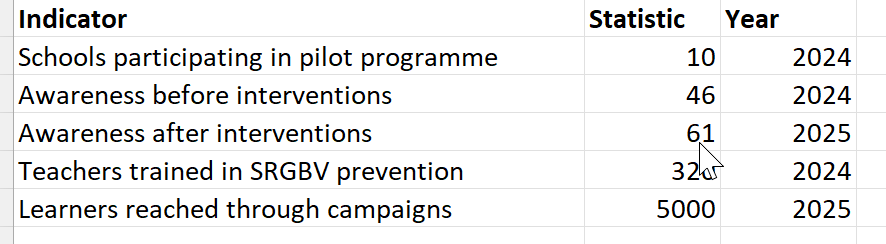
Despite these efforts, education experts argue that awareness campaigns alone are not enough. The key question remains whether interventions are translating into measurable outcomes. Has violence decreased? Are more victims reporting abuse? Are counselling services reaching affected learners? Are fewer girls dropping out because of pregnancy and sexual violence? Current data suggests significant gaps remain.
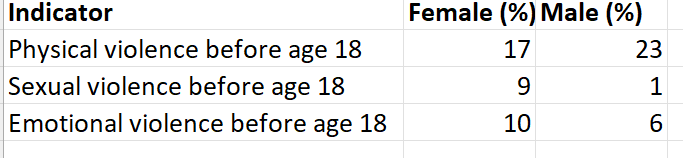
Globally, UNESCO estimates that nearly 246 million children experience school-related violence every year. Zimbabwe’s figures suggest the problem remains deeply rooted, affecting learners in classrooms, homes and communities across the country.
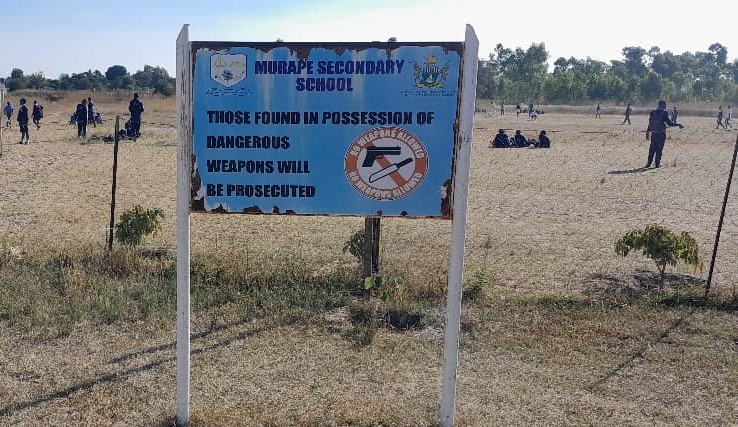
At Murape High School in Dema District, school authorities have erected anti-violence signage across the school grounds as part of efforts to promote learner safety and discourage abuse. The signs, which carry messages against bullying and harassment, serve as a reminder that violence remains a concern within schools, occurring both between learners and, in some cases, between teachers and students.
School authorities confirmed that they have guidance and counselling programmes and peer support initiatives that have improved learner engagement and created safer spaces for learners to report abuse and seek help. However, the presence of the signage also reflects the reality that school violence continues to affect many learners. Nationally, thousands of children continue to experience violence, while the majority receive little or no professional support.
For learners like Tariro, the statistics are personal. Behind every percentage is a child whose education, wellbeing and future are at stake. While programmes such as Safe Schools, Safe Communities are helping strengthen awareness and support systems, experts say meaningful change will depend on sustained investment, stronger community involvement and accessible support services for every child affected by violence.
The data tells a sobering story: violence continues to disrupt education for thousands of Zimbabwean learners, while many victims remain unheard, unsupported and at risk of being left behind. The figures suggest that the greatest challenge is no longer recognising the problem, but ensuring that every child who experiences violence can access protection, counselling, justice and a realistic opportunity to continue learning. Until then, thousands of learners remain at risk of disappearing from classrooms long before their education is complete.